Shader Cauldron goes social
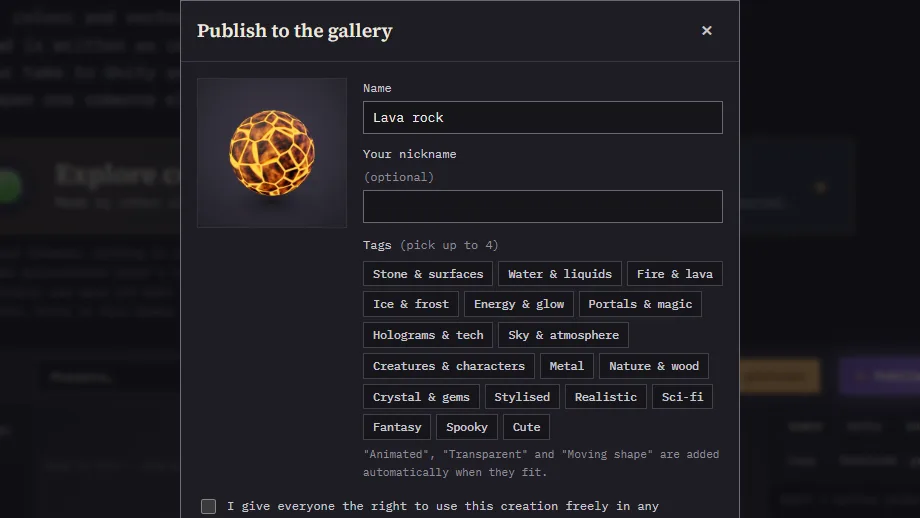
Hit Publish and your shader lands in the community gallery. No accounts, no forms. A name, a few tags and a box to tick. Everything shared is CC0, so take it and use it.
Hearts came along too.

Releases, updates, wins and the odd lesson learned the hard way. Newest first.
Hit Publish and your shader lands in the community gallery. No accounts, no forms. A name, a few tags and a box to tick. Everything shared is CC0, so take it and use it.
Hearts came along too.
A Godot shader maker that runs in your browser. Mix patterns, glow, transparency and motion, watch it live on a 3D model and save a real .gdshader. 33 effects, 23 patterns, 37 presets.
It also exports to Unity and Unreal. Those exports haven't been tested in those engines yet, so treat them as a head start, not a promise.
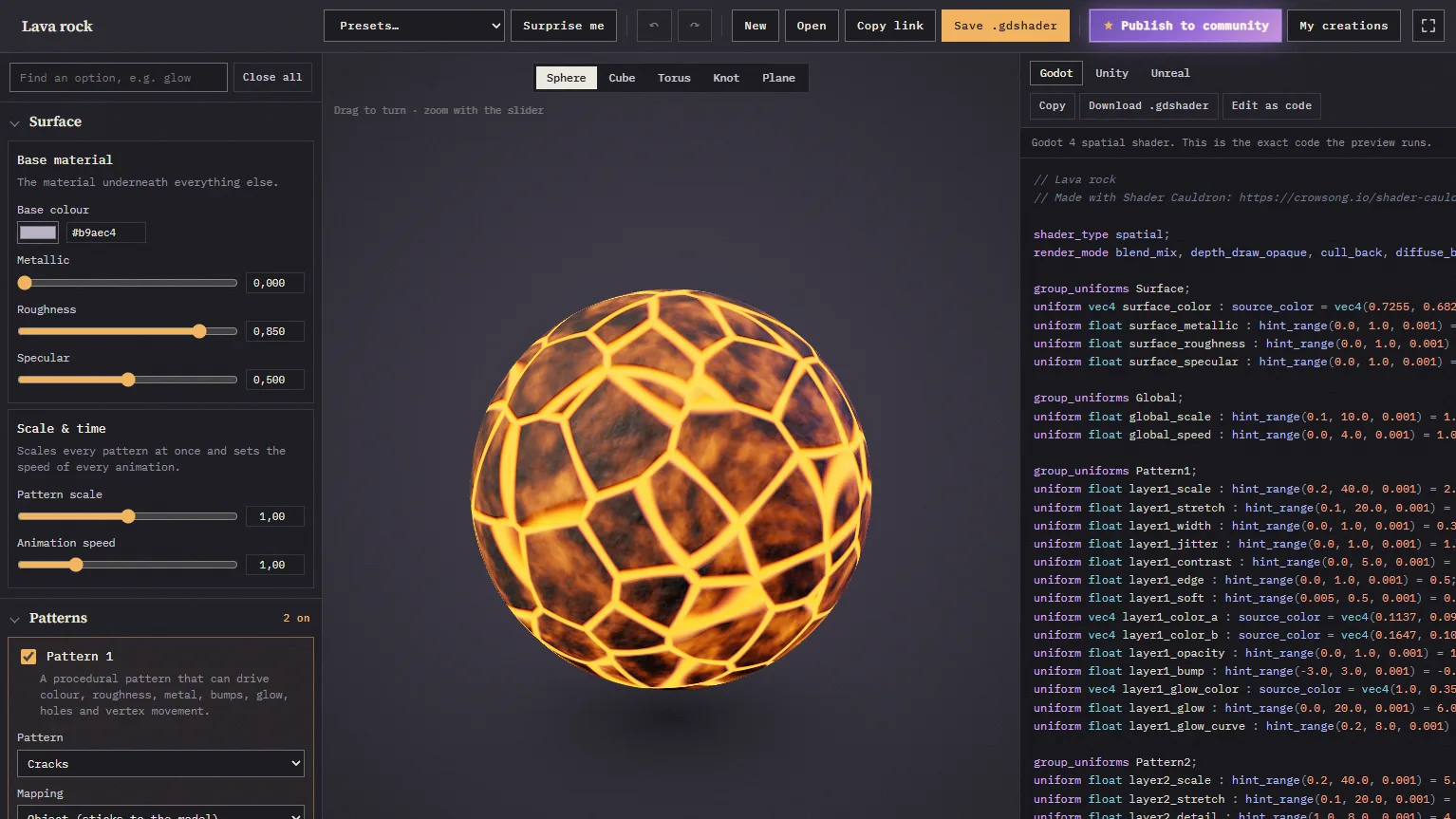
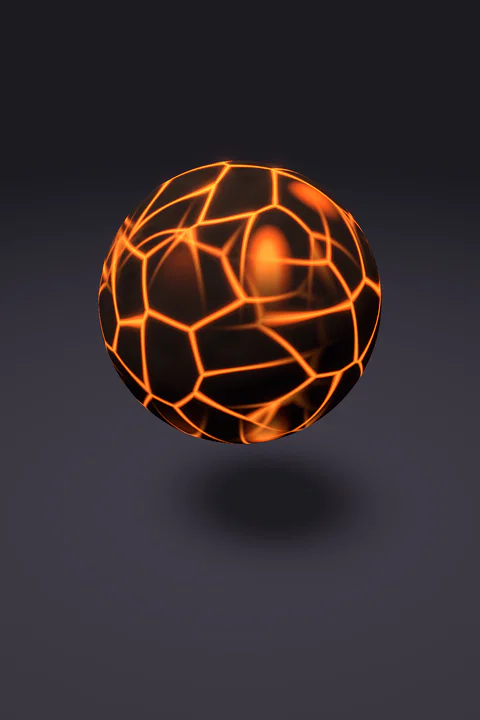
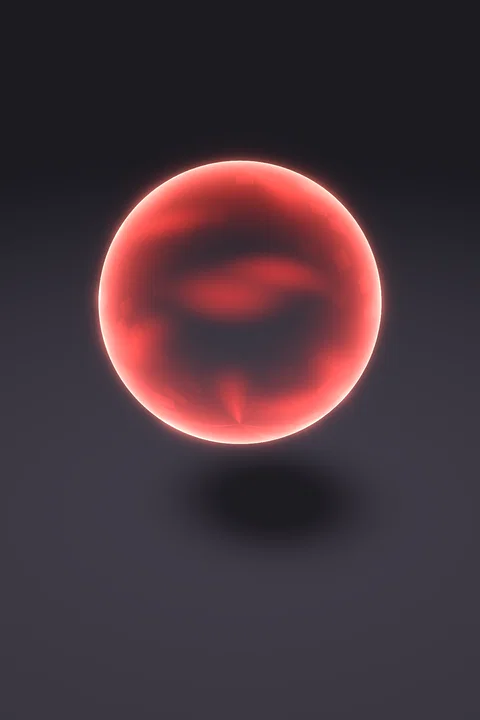
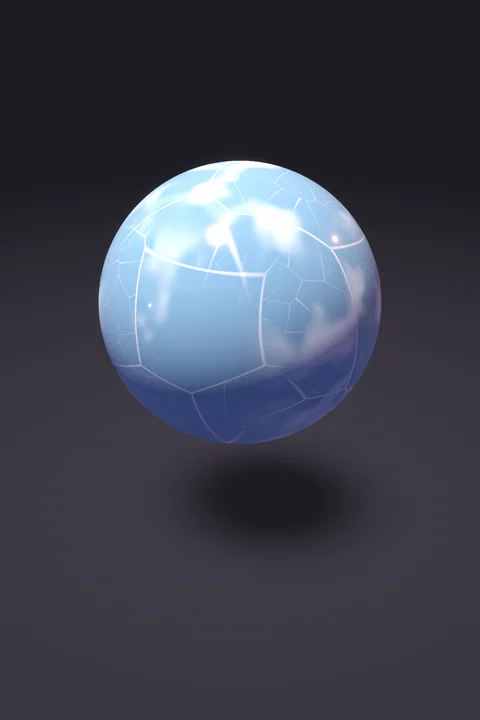
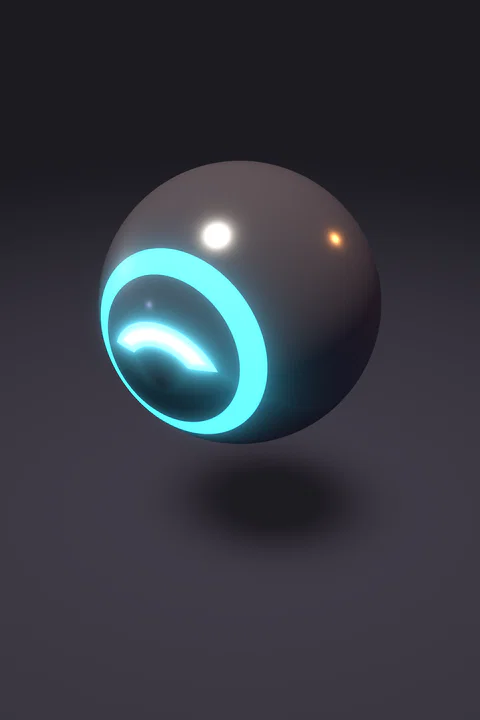
Tiko has a lot of shaders. Felt rude to keep them all. 42 of them are now in the shader library: cleaned up, standalone, spoiler-free, each with a picture and the code right there to copy.

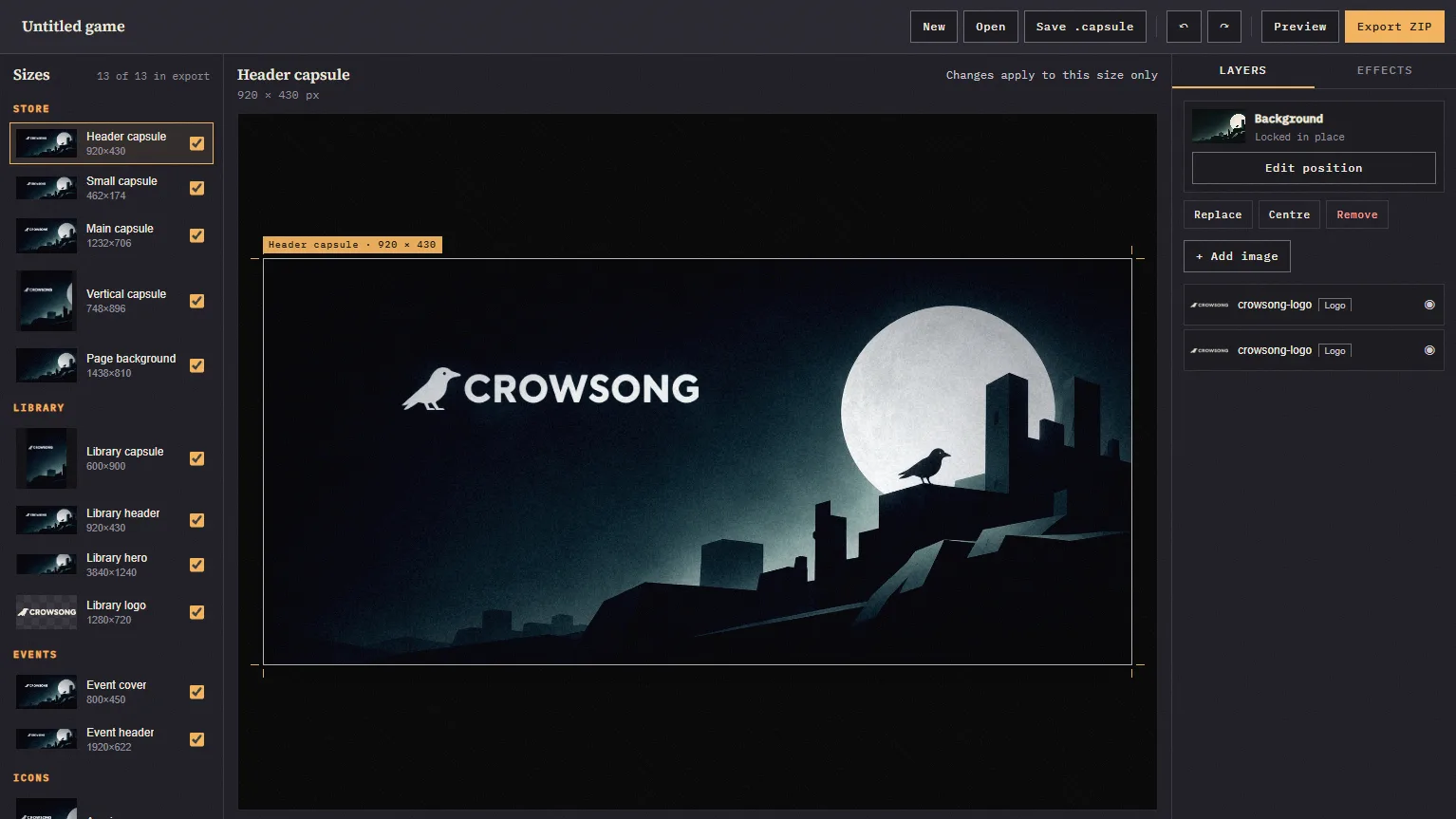
Steam wants your game art in 13 sizes. Making them one by one is a great way to lose a weekend. Lay it out once, nudge each size, check it in a mock store and export the lot as one ZIP. Nothing leaves your browser.
Fourteen months after the first commit, Obrum is out on Steam. A puzzle roguelite about an unstable system that gets harder to control the better you get at exploiting it.
There's a free demo. No excuses.
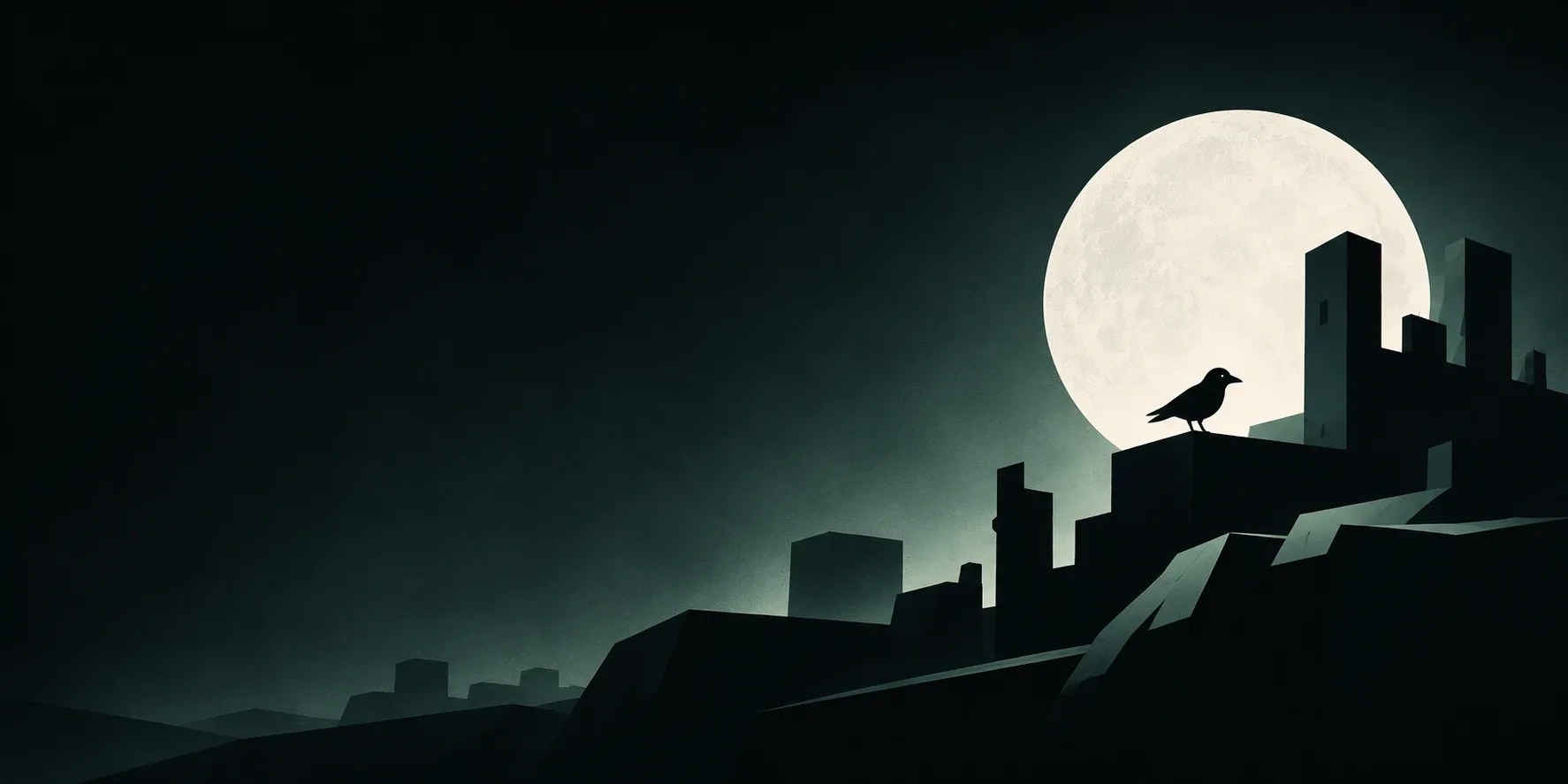
A home for the games, the tools and whatever else crawls out of the workshop. Dark, moonlit, only a little bit gloomy. Lagom.
Watch the crow on the front page for a while. It's watching you too.
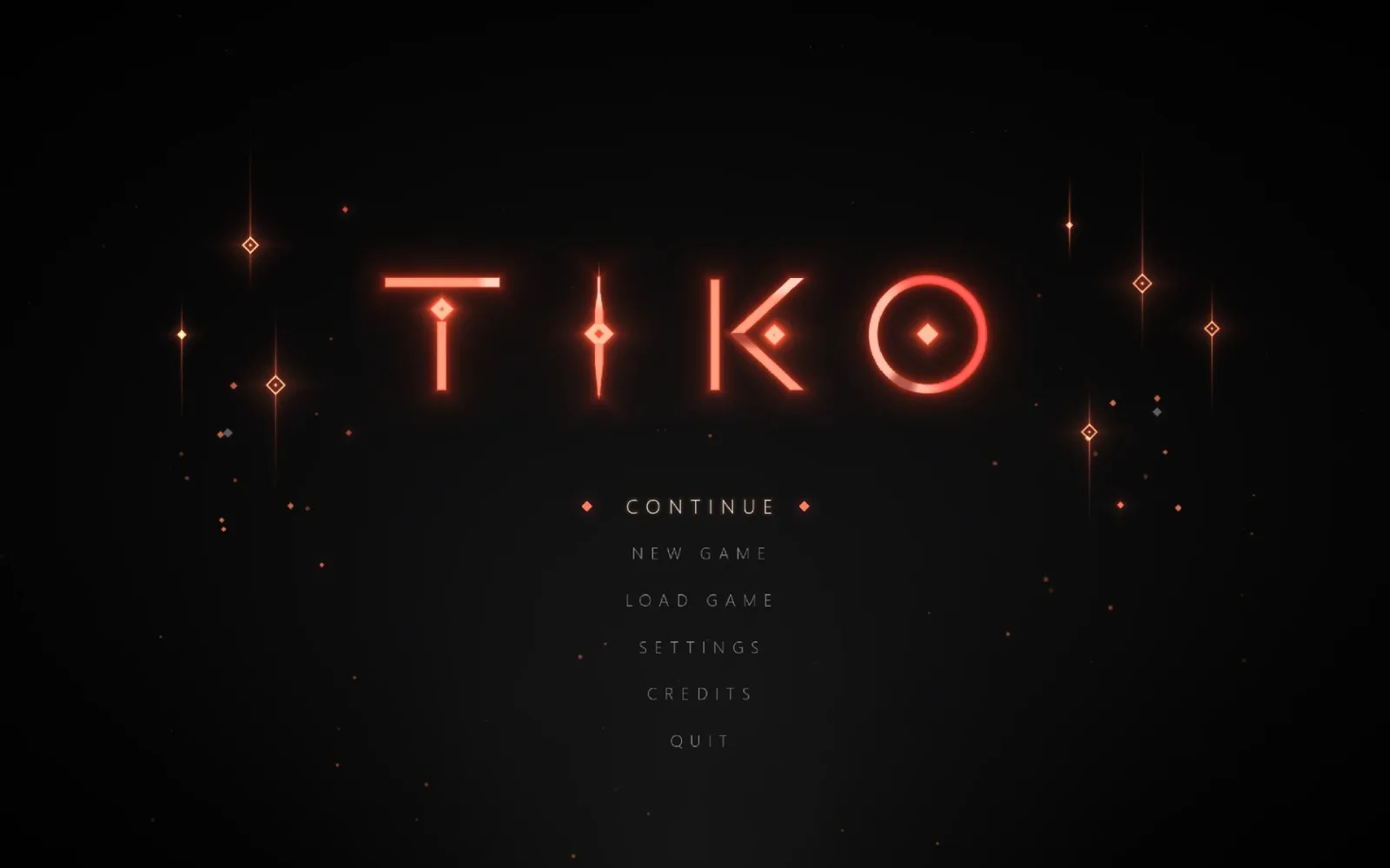
32 planes. 800 places to explore. 160 bosses and guardians. 130 custom shaders. And a title screen that finally looks like it means it.
Automated tests and a playtest bot went in early. It plays, finds something broken, it gets fixed, it plays again. Around 3,500 game runs and 285 caught bugs later, it's the best call in the whole project.
It plays at night... mostly.
Combat clicked. Line up gems so every shot triggers the next: bolt, fork, burn. Every guardian drops a sigil that bends the rules a little further. Then you rearrange everything and find something even sillier.
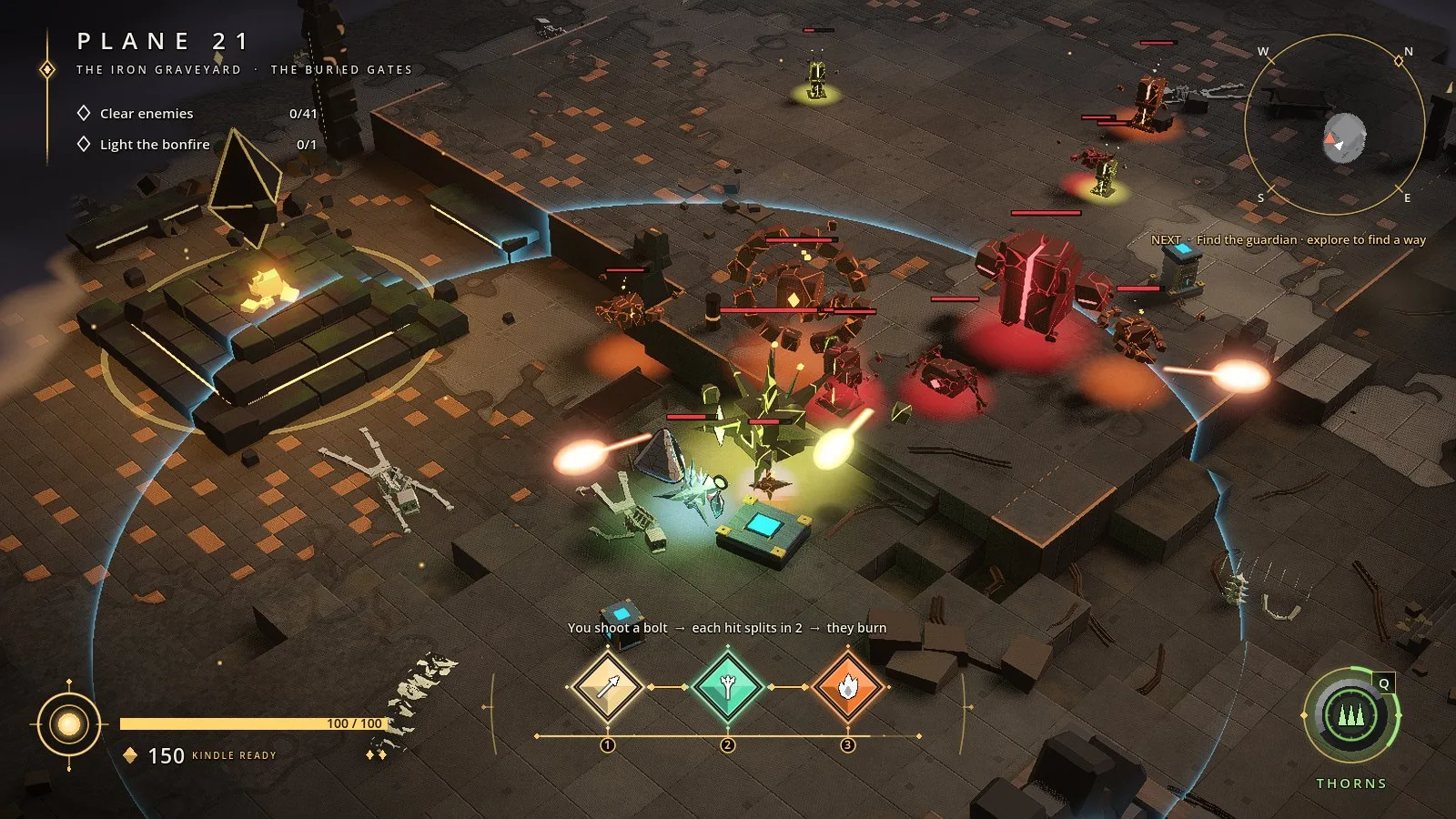
Monsters are now built from parts by role, then skinned per element. Looks terrible, but it's a start.
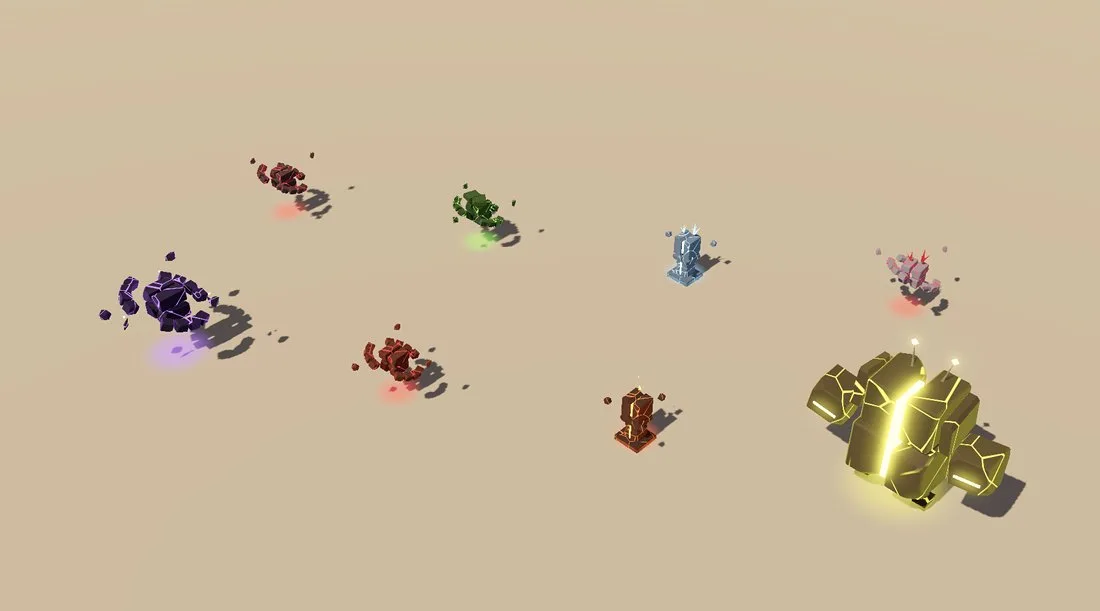
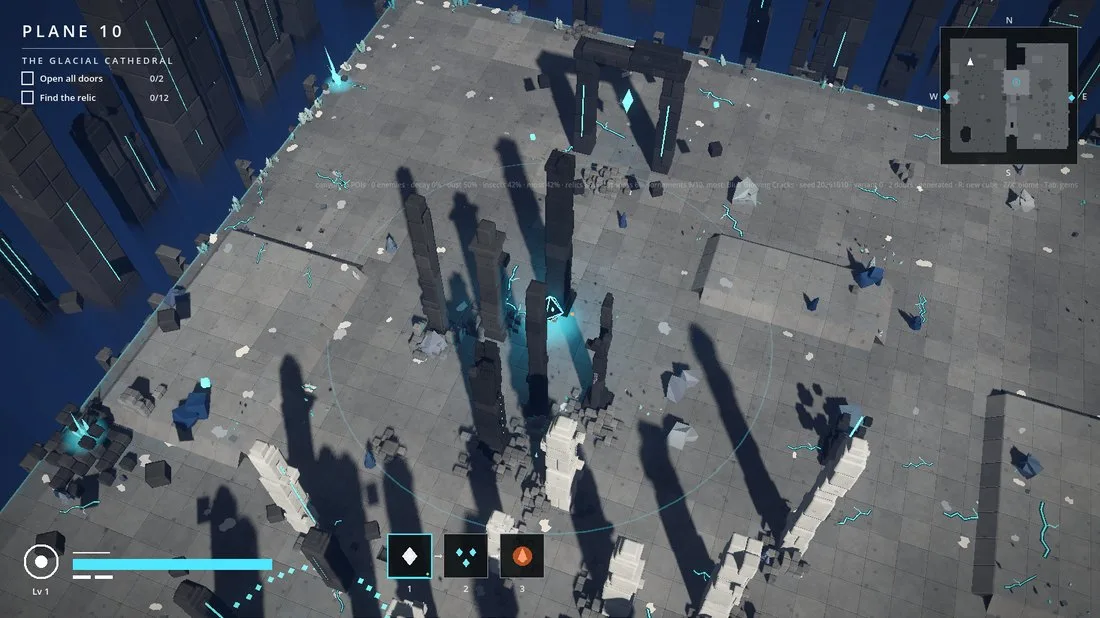
Each plane got its own palette, light, fog and set of ornaments.
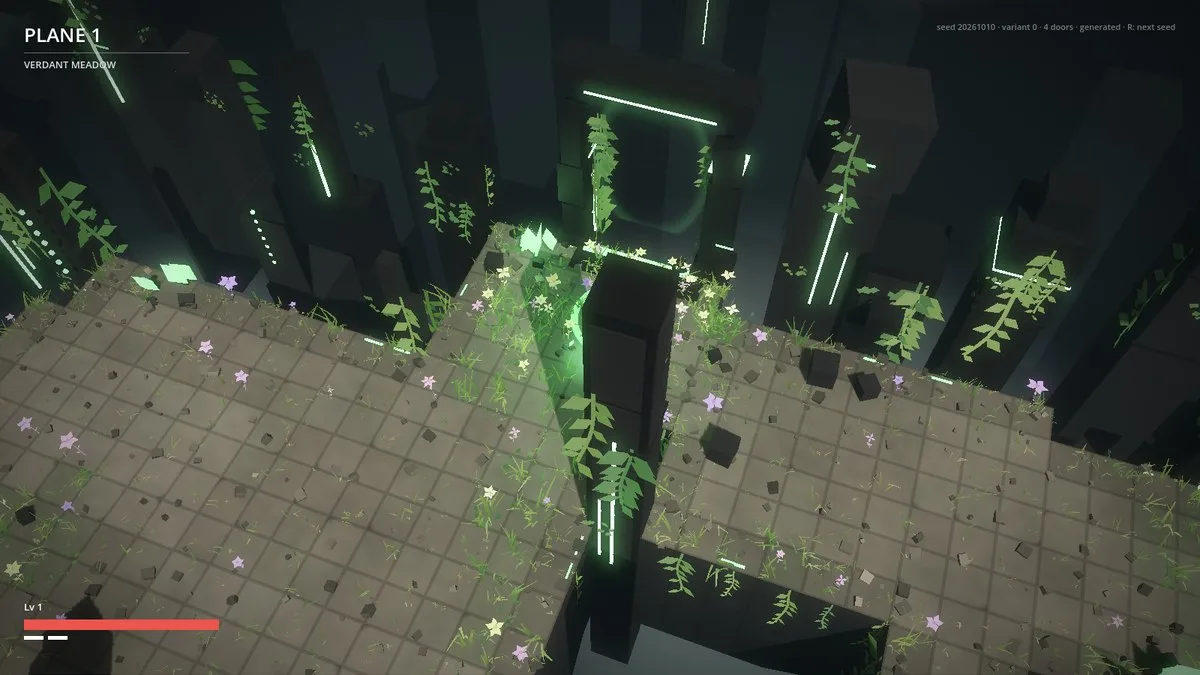
Two days later: ground, walls, vines, flowers and glowing monoliths. Same plane, same seed. Suddenly somewhere you'd actually want to get lost.
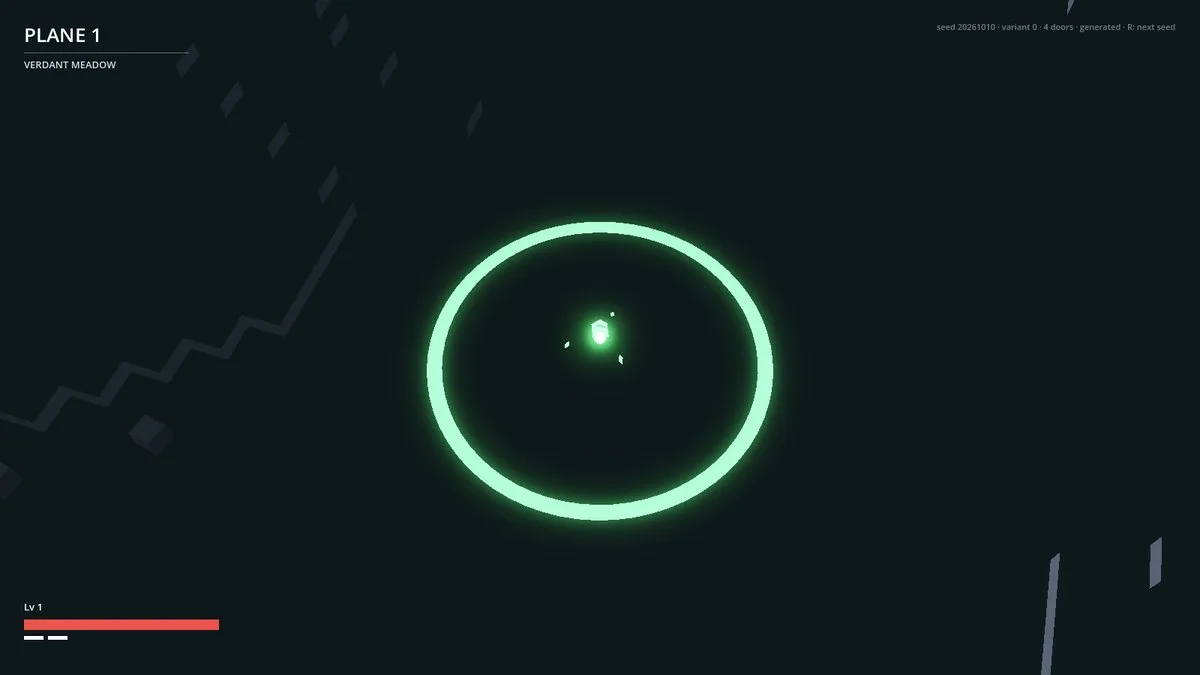
Tiko started as a glowing ring on a black screen. The plan: a world of 32 planes stacked downwards, each a grid of cubes, every cube built from a seed so it's the same every visit.
First job: make moving around feel right. Pretty can wait.
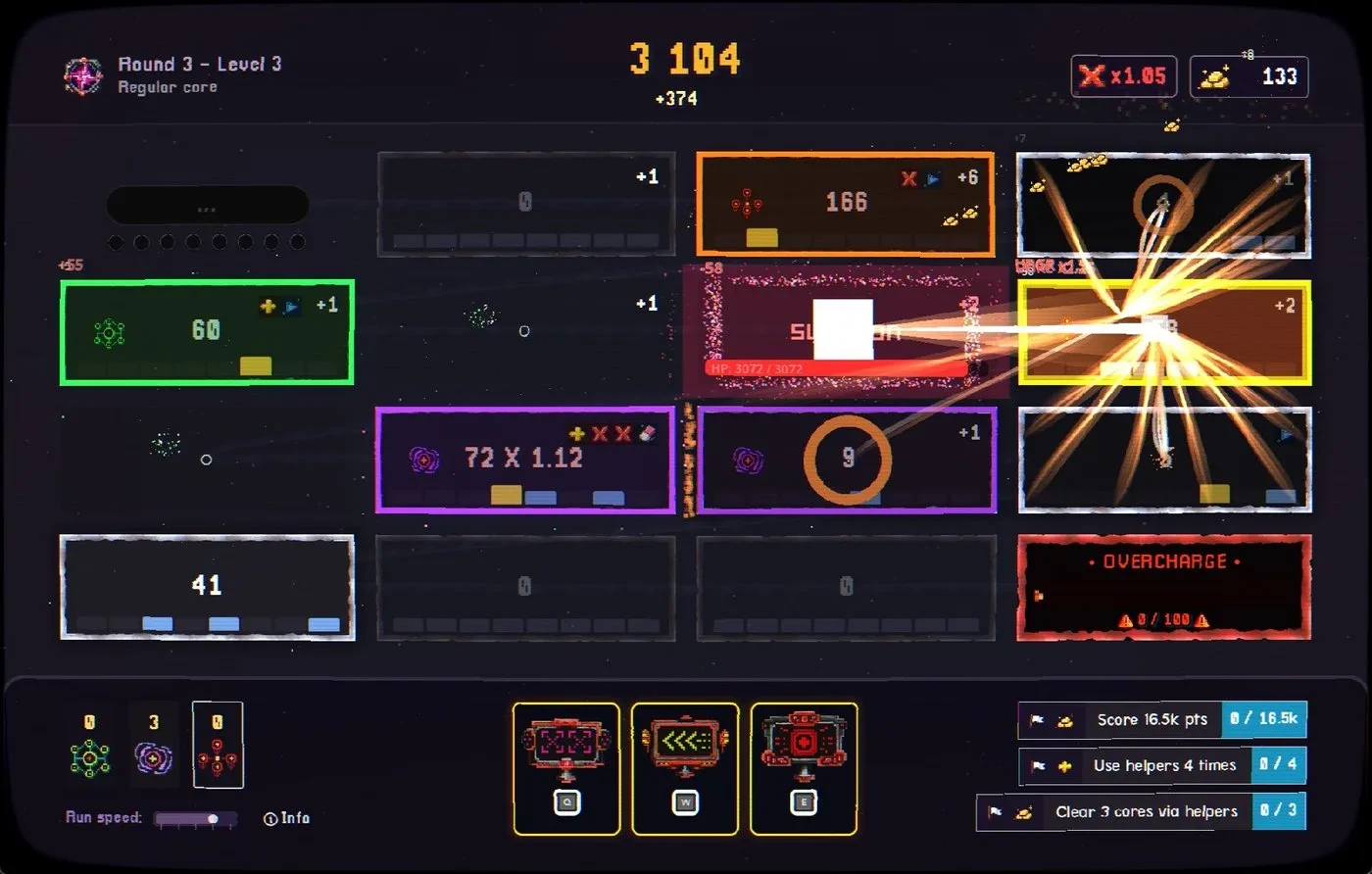
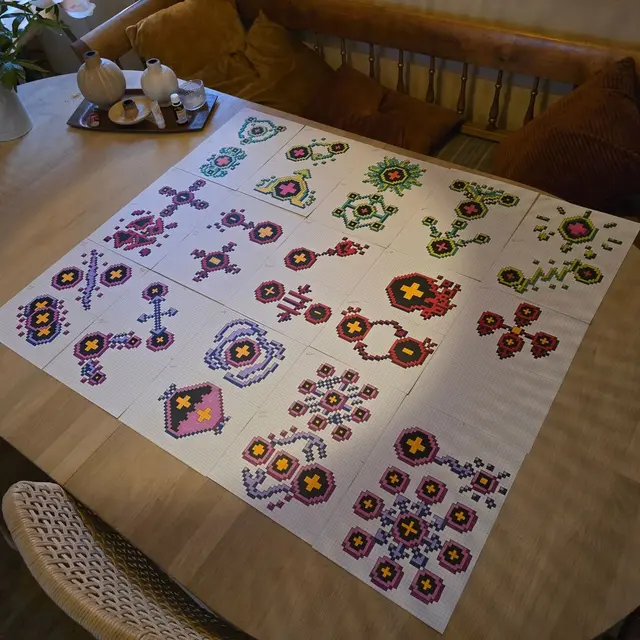
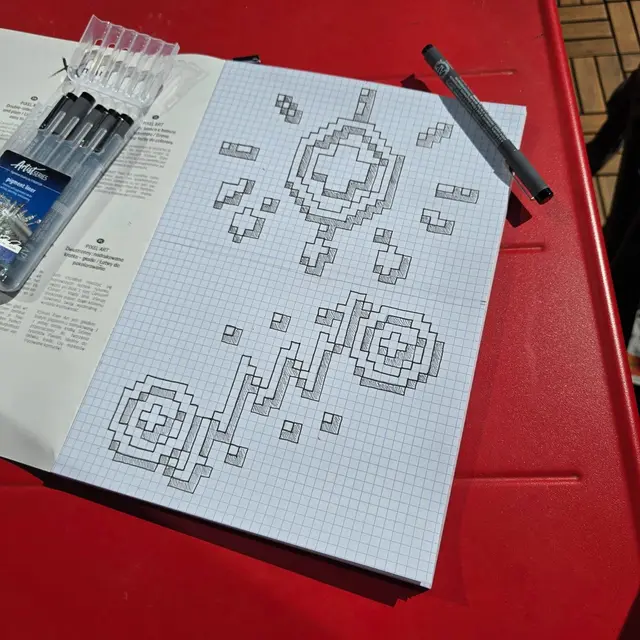
Every core, rule and helper, drawn square by square on graph paper with pigment liners and markers, then brought into the game. Slow? Very. Worth it? Look at them.
Actual commit message from today. Seven months in. A winter break, a full UI rework, and suddenly the whole thing reads better.
Fresh eyes are cheap and they work. Step away more often.
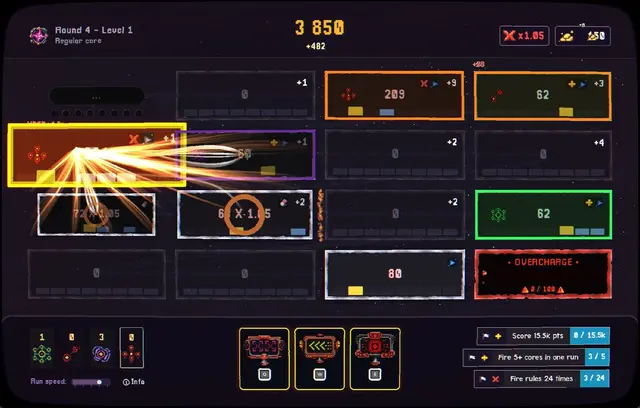
Steam leaderboards are in, with your rank. Nothing motivates quite like someone else's name above yours.
Enemies and the boss got their own shaders, plus a glowing border when the heat rises. The board stopped looking like a spreadsheet.
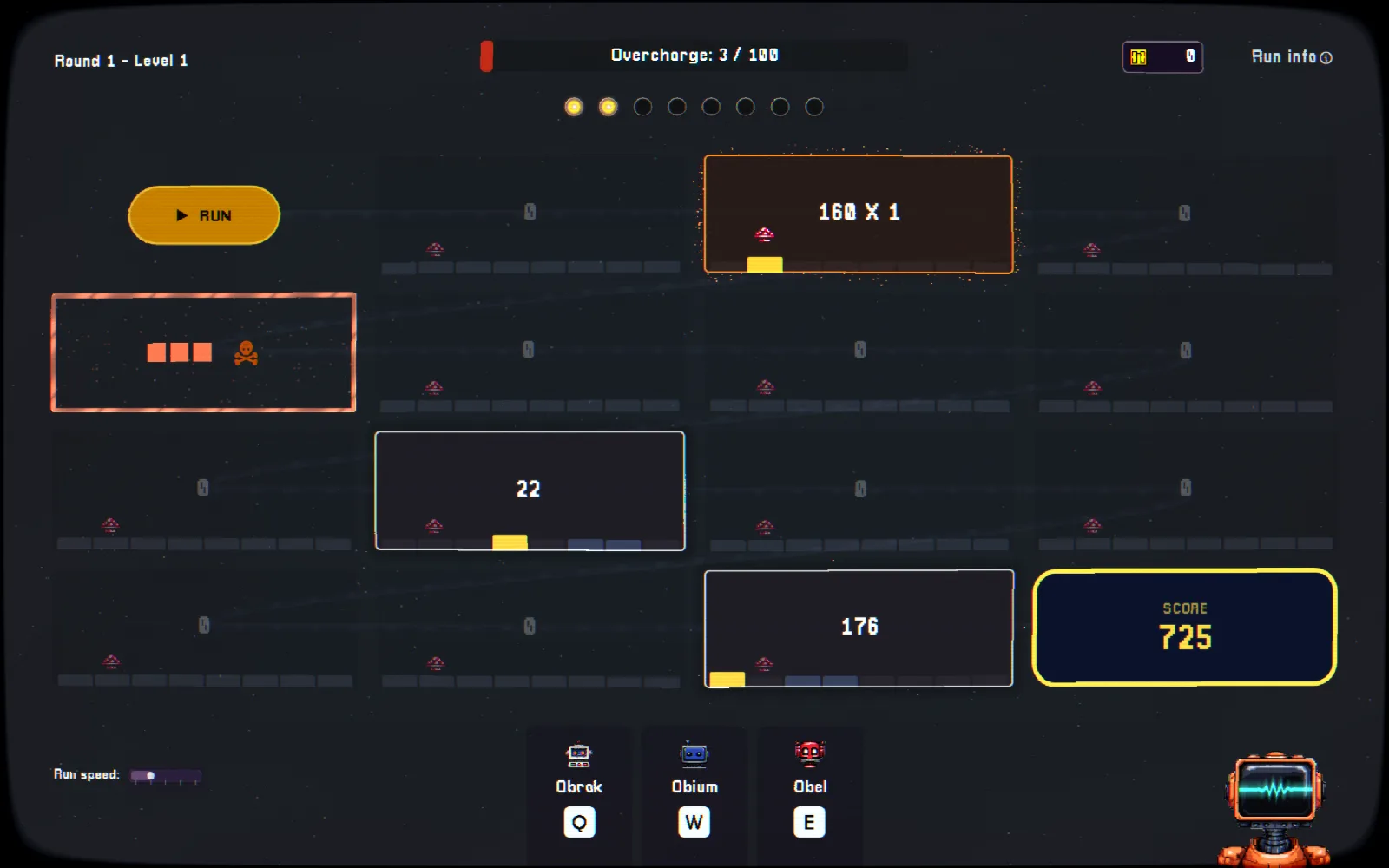
Ten days in, one script was doing everything. Two days went into splitting it up: grid, rules, enemies, effects, helpers. Nothing new on screen, everything easier after.
Do it before it hurts, not after. After is more expensive.
First commit. A strange idea about a board that resolves itself, square by square. Let's see where this takes me.
Nothing here yet. Give it time.